
How Lotions & Cosmetics Damage Your Upholstered Sofa
Skincare products silently damage your sofa. Learn how oil-based residue causes dark stains on upholstery & why professional couch cleaning in Denver, CO helps.
6/10/20264 min read
How Body Lotions and Cosmetics Are Secretly Damaging Your Upholstered Furniture
You moisturize your hands, sink into your favorite couch, and never think twice about it — but your sofa might be silently suffering. 🛋️ If you've ever noticed mysterious dark patches on your headrest or armrests that just won't go away no matter how much you scrub, body lotions and cosmetics are likely the culprit. As upholstery cleaning specialists serving Denver, CO and the surrounding areas, we see this kind of damage every single week — and we want you to understand exactly what's happening so you can protect your furniture.
Why Skincare Products Are Hard on Upholstery Fabric
Here's something most people never connect: the same ingredients that make your skin feel soft and supple are a nightmare for upholstery fabric. Body lotions, face creams, sunscreens, and even makeup all contain oils, silicones, waxes, and emollients. When these transfer from your skin to your sofa or armchair, they don't just sit on the surface — they sink into the fibers.
Think of it like pouring a tiny drop of cooking oil onto a paper towel. It doesn't stay put. It spreads. Fabric works the same way, and with repeated contact over weeks and months, those oils accumulate deep inside the weave where a regular wipe-down can't reach them. This is why professional upholstery cleaning in Denver, CO is so important — surface cleaning simply doesn't get to where the problem actually lives.
The Invisible Buildup You Can't See (Yet)
One of the trickiest things about cosmetic residue is that it's invisible at first. 😬 A light application of hand lotion, a little foundation on your collar, some hair product on the back of your neck — none of these seem like a big deal in the moment. But they add up.
Over time, these invisible layers of product create a biofilm on your upholstery fabric — a sticky, slightly greasy coating that attracts dust, dead skin cells, and airborne particles. Your sofa starts to look dull and feel slightly tacky, even if you can't identify a single obvious stain. By the time you notice something's wrong, you're dealing with deep-set buildup that's been months in the making.
We like to compare it to a window you haven't cleaned in a year. It doesn't look broken or obviously dirty — it just looks cloudy and dull. Your fabric gets that same "cloudy" quality when cosmetic residue builds up. That's exactly the kind of issue that responds best to professional couch cleaning — not just a surface wipe, but a proper deep extraction.
Darkening on Headrests, Armrests, and Cushions
This is the stage our technicians see most often when a client reaches out for couch cleaning in Denver, CO: visible dark patches, usually on the headrest area, armrests, and the top edge of seat cushions. These are the zones where skin and clothing make the most consistent contact.
Here's why these areas darken:
Oil-based residue from lotions, hair products, and natural skin oils coats the fibers
Over time, that oily layer attracts and traps soil — dust, dead skin, air pollution
The trapped particles oxidize (essentially, they age and darken in contact with air)
The result is a deep, grayish-brown discoloration that looks permanently stained
The frustrating part? Many homeowners try to scrub these spots on their own, which often makes things worse. Rubbing drives the residue deeper into the fabric and can damage the fibers. We've seen DIY attempts turn a manageable darkened headrest into a frayed, permanently discolored patch. That's heartbreaking — and entirely avoidable.
Why Oily Stains Are the Hardest to Clean from Upholstery
Oil and water don't mix — you already know this from washing greasy dishes. The same principle applies to upholstery fabric cleaning. Water-based cleaning sprays, which are what most store-bought sofa cleaners are, simply cannot break down oil-based cosmetic residue. They push moisture into the fabric, the oily stain resists it, and you end up with a wet, slightly smeared version of the same problem. 😅
What actually works is a combination of:
Solvent-based pre-treatment to break down oil molecules
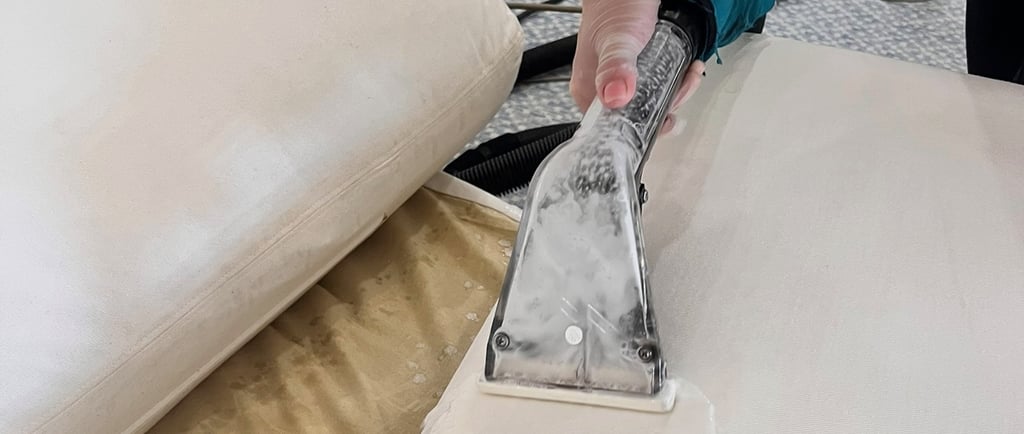
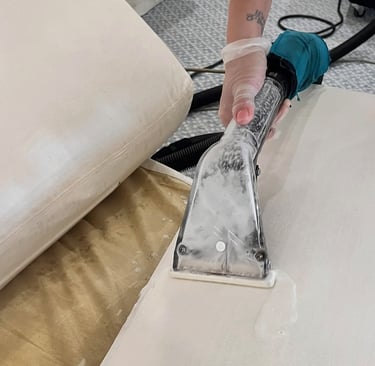
Hot water extraction (sometimes called steam couch cleaning or steam upholstery cleaning) to flush out loosened residue from deep within the fibers
pH-balanced finishing agents to restore the fabric's texture and prevent re-soiling
This is why professional upholstery cleaning requires specific chemistry and equipment — it's not something a rented machine or a store-bought spray can replicate. We use professional-grade solvents and hot water extraction systems specifically calibrated for different fabric types, whether that's microfiber, velvet, linen, or a synthetic blend.
How to Prevent Cosmetic Damage to Your Upholstery
The good news is that a few simple habits go a long way in protecting your furniture. 🌟 Here's what we recommend to our clients:
Let lotions and sunscreen absorb fully before sitting down — give it at least 5 minutes
Use a throw blanket or slipcover on high-contact areas like headrests and armrests
Apply hair products away from upholstered surfaces — styling sprays and serums are sneaky fabric-stainers
Blot (never rub!) any cosmetic transfer immediately with a clean, dry cloth
Schedule regular professional upholstery cleaning at least once a year — more often if you use heavy skincare routines or have kids and pets in the house
Preventive care is always easier and less expensive than restoration. Think of annual sofa cleaning the same way you think about dental cleanings: a little maintenance now saves a lot of pain later.
Conclusion: Protect Your Furniture with the Experts at Rocky Clean
As you can see, the relationship between cosmetics and upholstery damage is more complex than it first appears. 🧴🛋️ Oil-based residue transfers silently from your skin to your fabric, invisible buildup accumulates over months, and before long you're staring at stubborn darkening on your headrests and cushions that no household cleaner can fully remove.
And cleaning it properly is genuinely technical work. It requires understanding fabric composition, selecting the right solvent chemistry, using professional-grade hot water extraction equipment, and knowing exactly how much moisture and heat a specific fabric can tolerate without shrinking or distorting. Get any one of those variables wrong and you can cause more damage than the original stain.
That's why we always encourage our clients not to go it alone. If you're in Denver, CO and you're noticing dullness, darkening, or that faint "used" smell that often comes with cosmetic buildup, let the professionals handle it. Rocky Clean – Couch Cleaning LLC specializes in exactly this kind of deep, restorative upholstery cleaning — we know fabrics, we know stains, and we know how to get your furniture looking and feeling fresh again. 💪
👉 Ready to give your furniture the care it deserves? Contact Rocky Clean – Couch Cleaning LLC today and book your professional upholstery cleaning in Denver, CO. Your couch will thank you!
CONTACTS


2851 S Parker Rd Ste 916, Aurora, CO 80014, United States